Situated in the northeastern German state of Brandenburg, the Spreewald region is renowned for its green winding canals and lush waterscape. However, with projected water shortages along the River Spree—from its source in Kottmar to its passage through Berlin—both rural and urban regions face a complex and interwoven set of challenges. This formed the background to River Stories, an exhibition which was initiated by the experimental science communication project AnthropoScenes. It took place in a small village called Raddusch in the centre of the Spreewald, and invited scientists, artists, and local residents to co-create pieces which reflected the waters, as well as its plant, animal, and human communities. The resulting artworks were showcased during a two-day festival in the Spreewald, then packed into a traditional Spreewald barge and brought downstream to be displayed in Berlin.
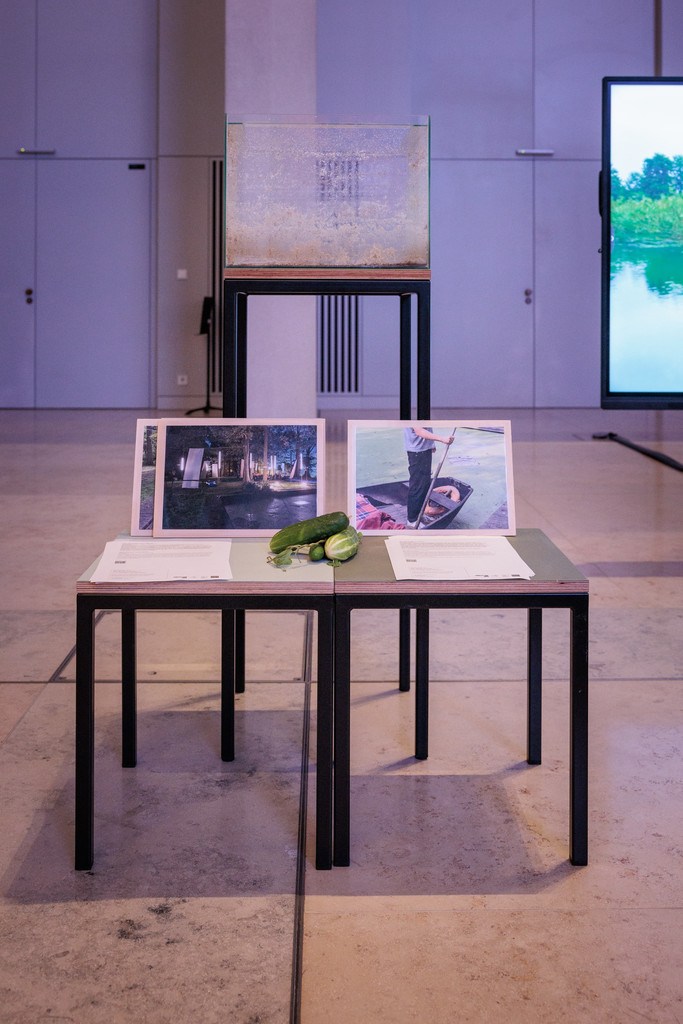
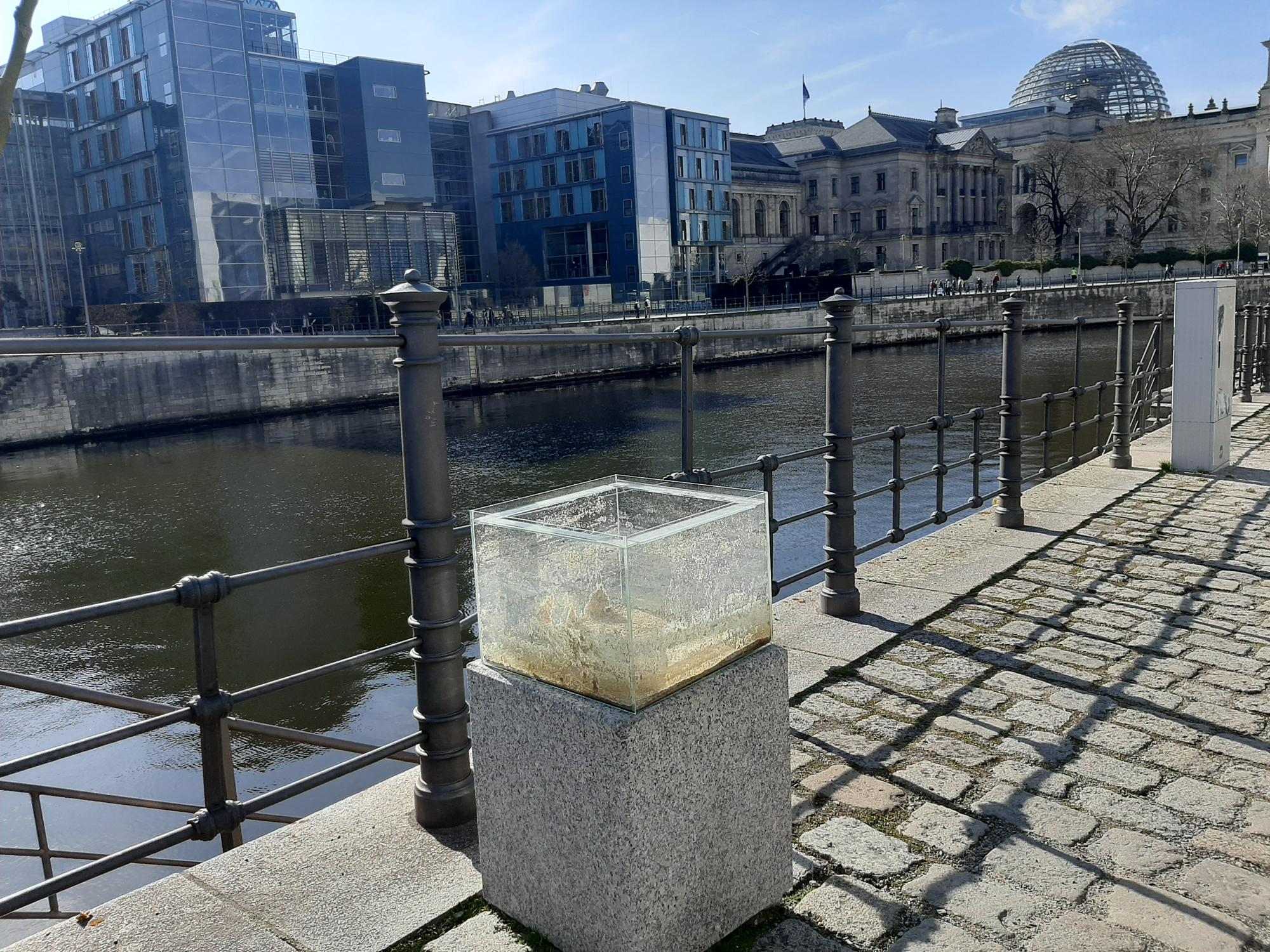
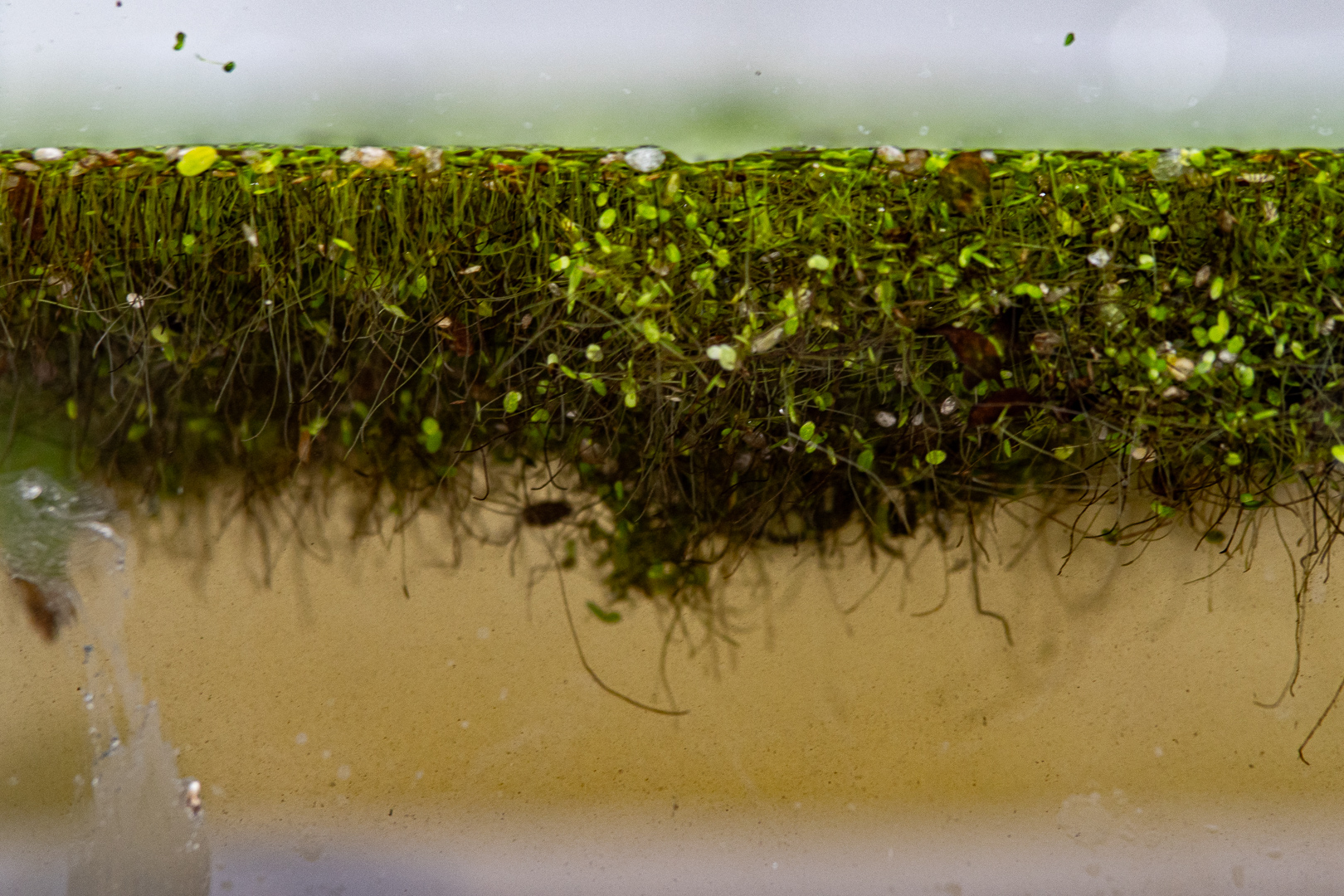
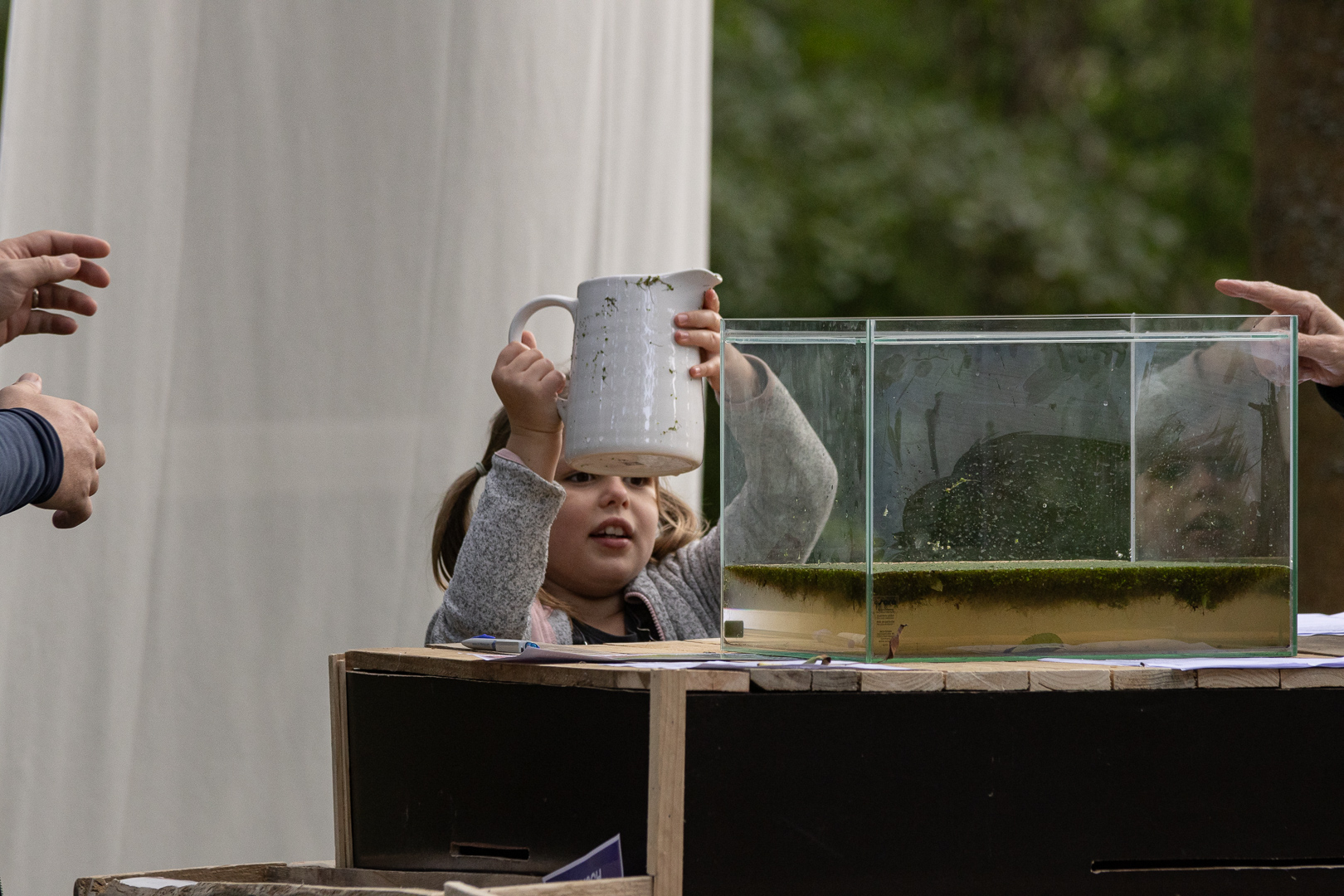
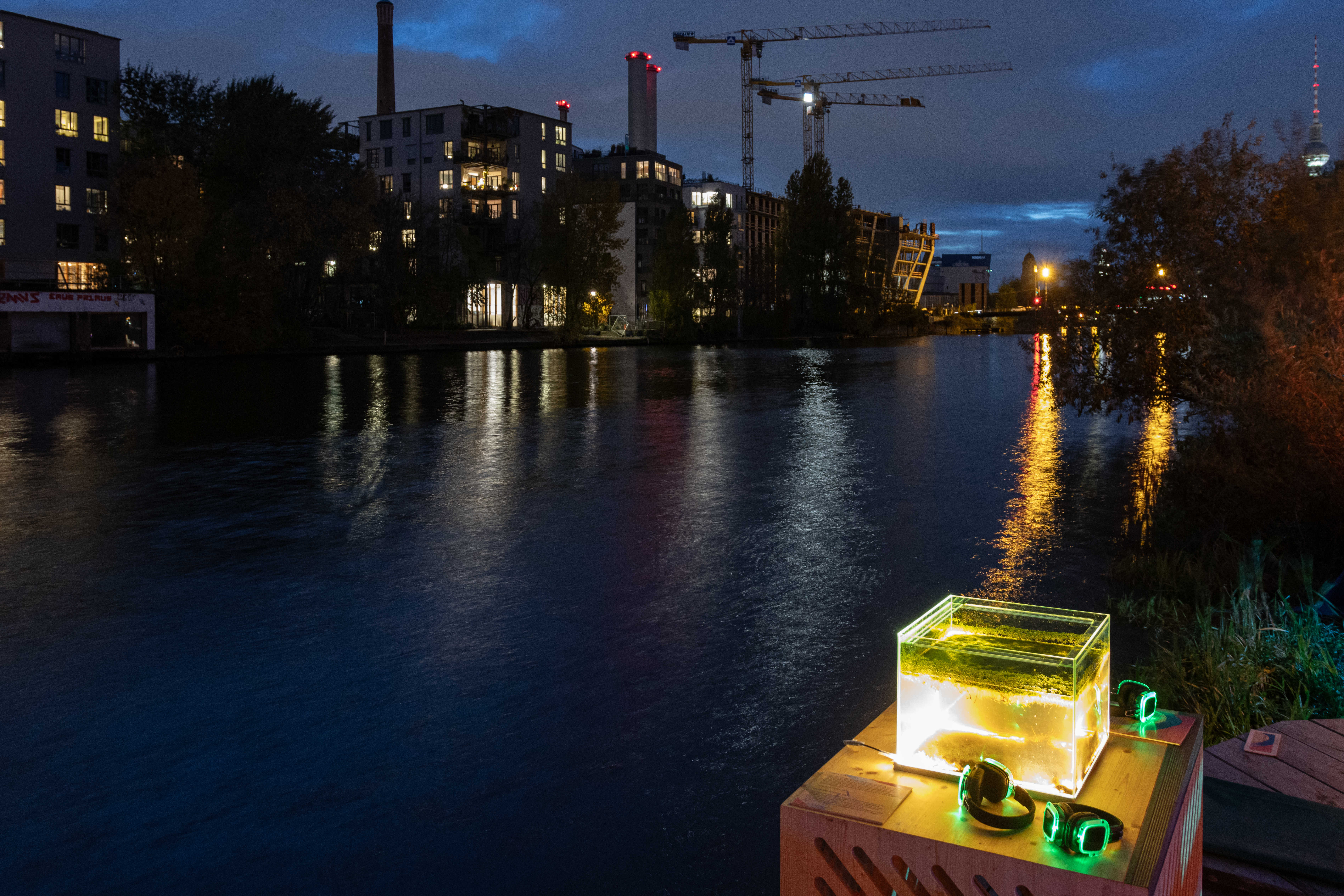
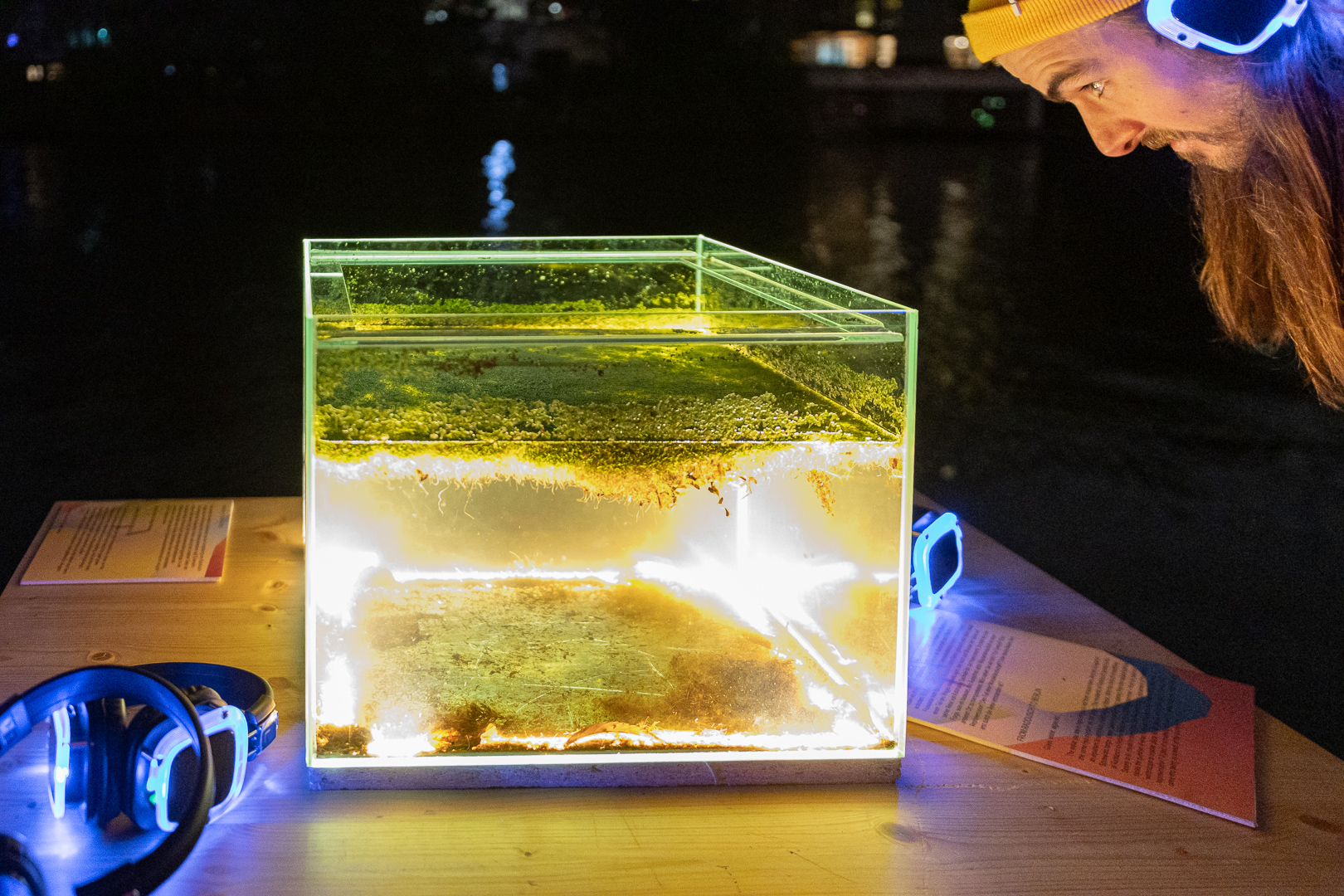
One of them was an installation in which participants of the festival in Raddusch were invited to pour water from the canals into an aquarium. The piece was conceptualized by the artistic director of River Stories Maximilian Grünewald and designed by the art collective SurrealLabor, in cooperation with the other involved artists and scientists. The aquarium became the protagonist of the short film Bellerophontes Traum which captured the river journey of the barge. It also became part of the exhibition in Berlin, where it was placed alongside the Spree river, raising questions among visitors: Is this water a message, a symbol, a fragment of a waterscape—or something transformed by its transport and display?
After the exhibitions finished, and the proverbial dust (or rather the algae in the aquarium) settled, the funding for the AnthropoScenes project ended without opportunities for extension. This left no institutional support for proper storage or archiving—placing the aquarium, along with the other works, at risk of being discarded. Not only their physical materiality, but their online presence was at risk, as website maintenance was not guaranteed. Instead, the societal impact and ‘quality performance indicators’ were expected, reducing the pieces to one-dimensional objects that were categorized and measured for quantitative outcomes.
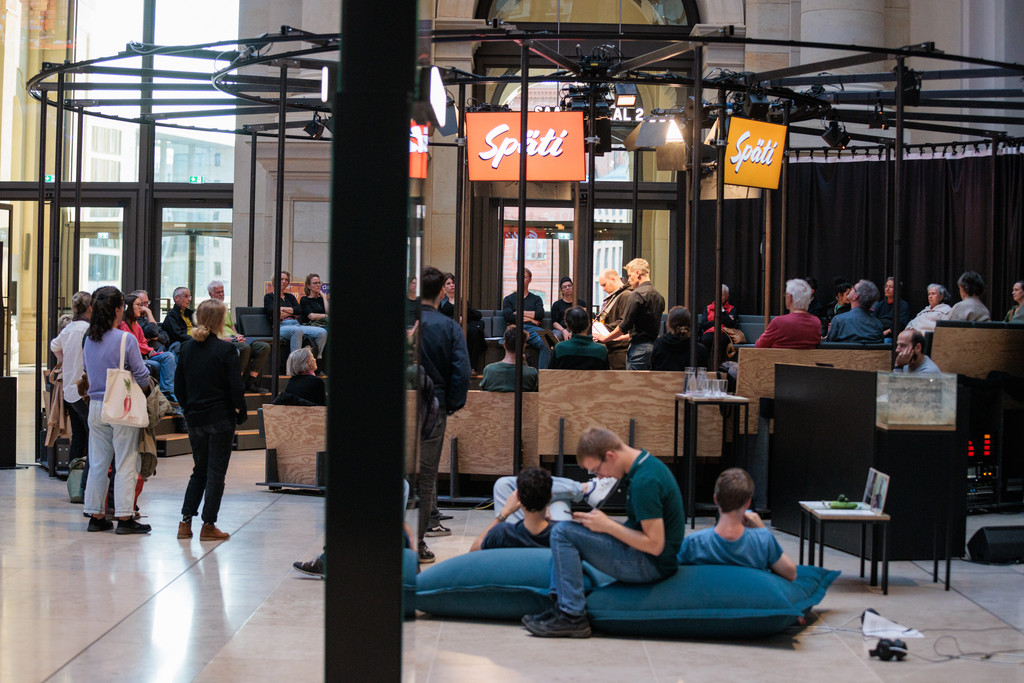
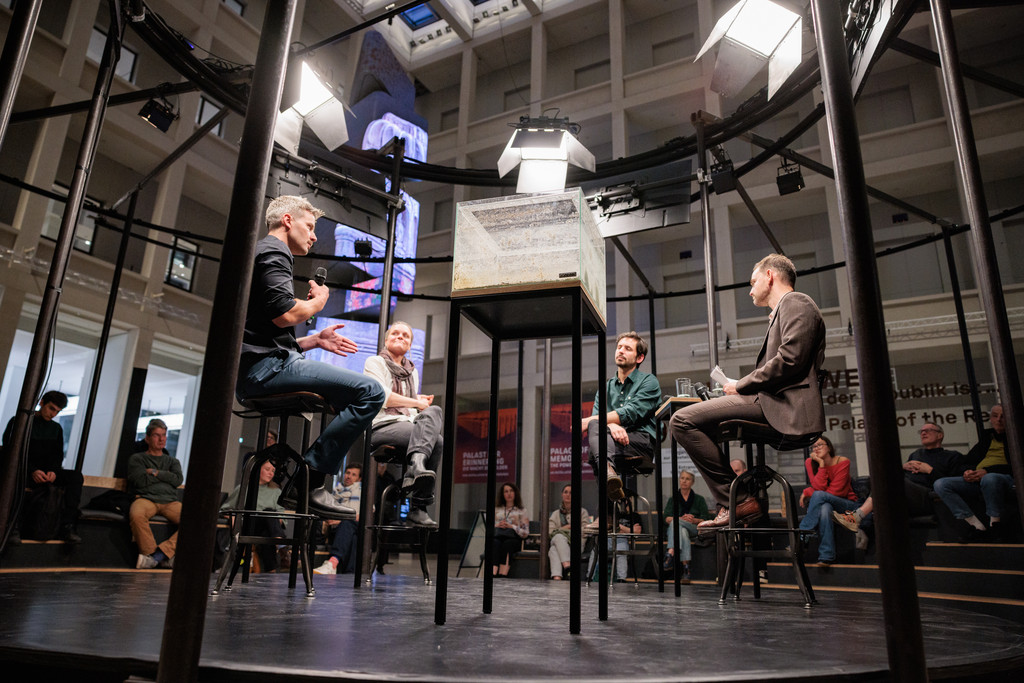
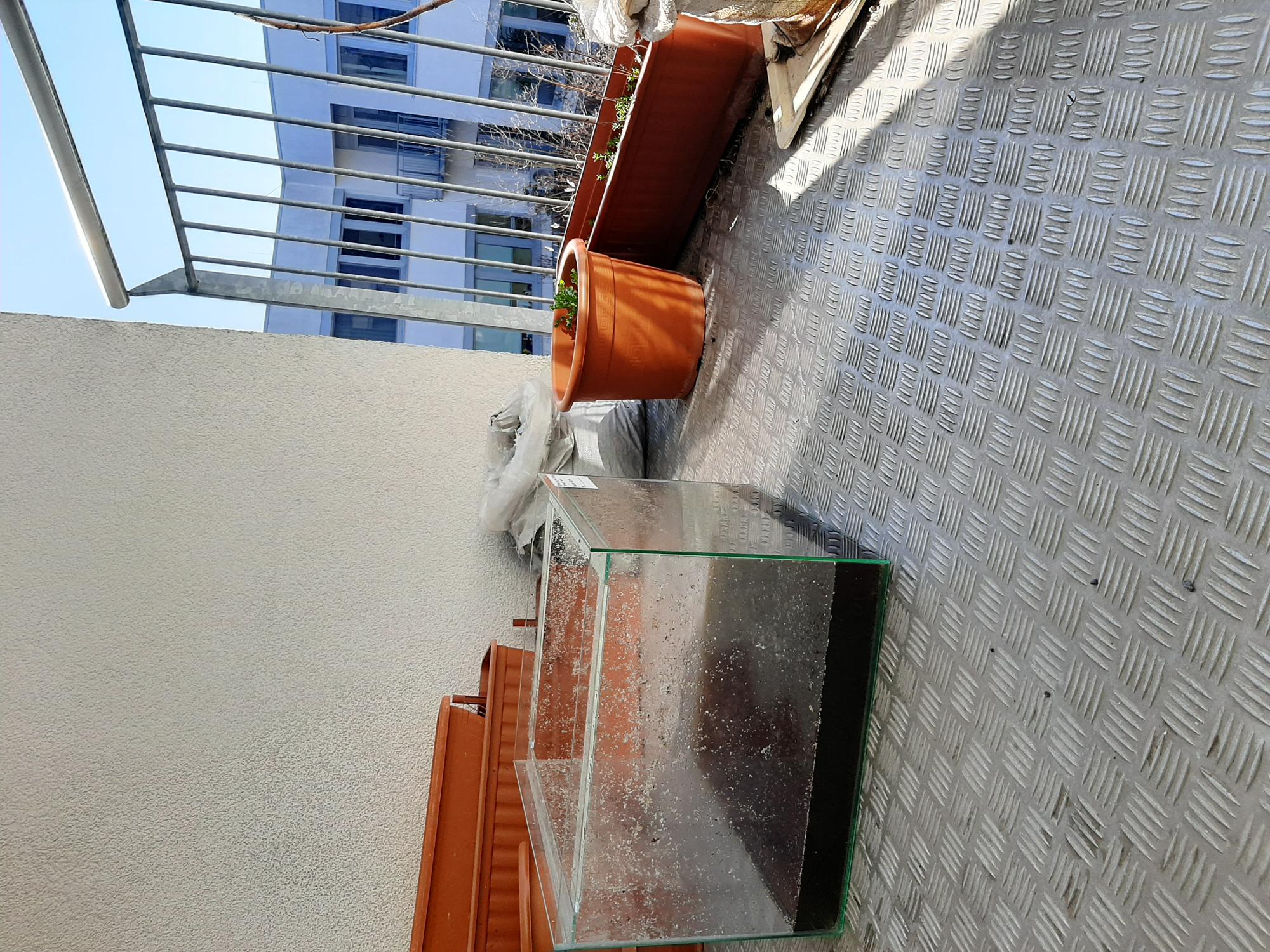
Some components and pieces were ultimately thrown away. Others were kept, stacked away in office cupboards, stored in random artist lofts, even stowed away in the author’s basement. Luckily, other artifacts of River Stories persist, carried forward through new contexts, formats, and events. The aquarium has taken on several different roles; It took part in a panel discussion in the Humboldt Forum representing the voice of the river Spree. It became the center piece of an audio installation at a conference called Sedimentary Listening where people could once more pour water into the aquarium while listening to river soundscapes. Bits of algae have even been used to fertilize cucumber plants, which grow happily on a university building balcony.
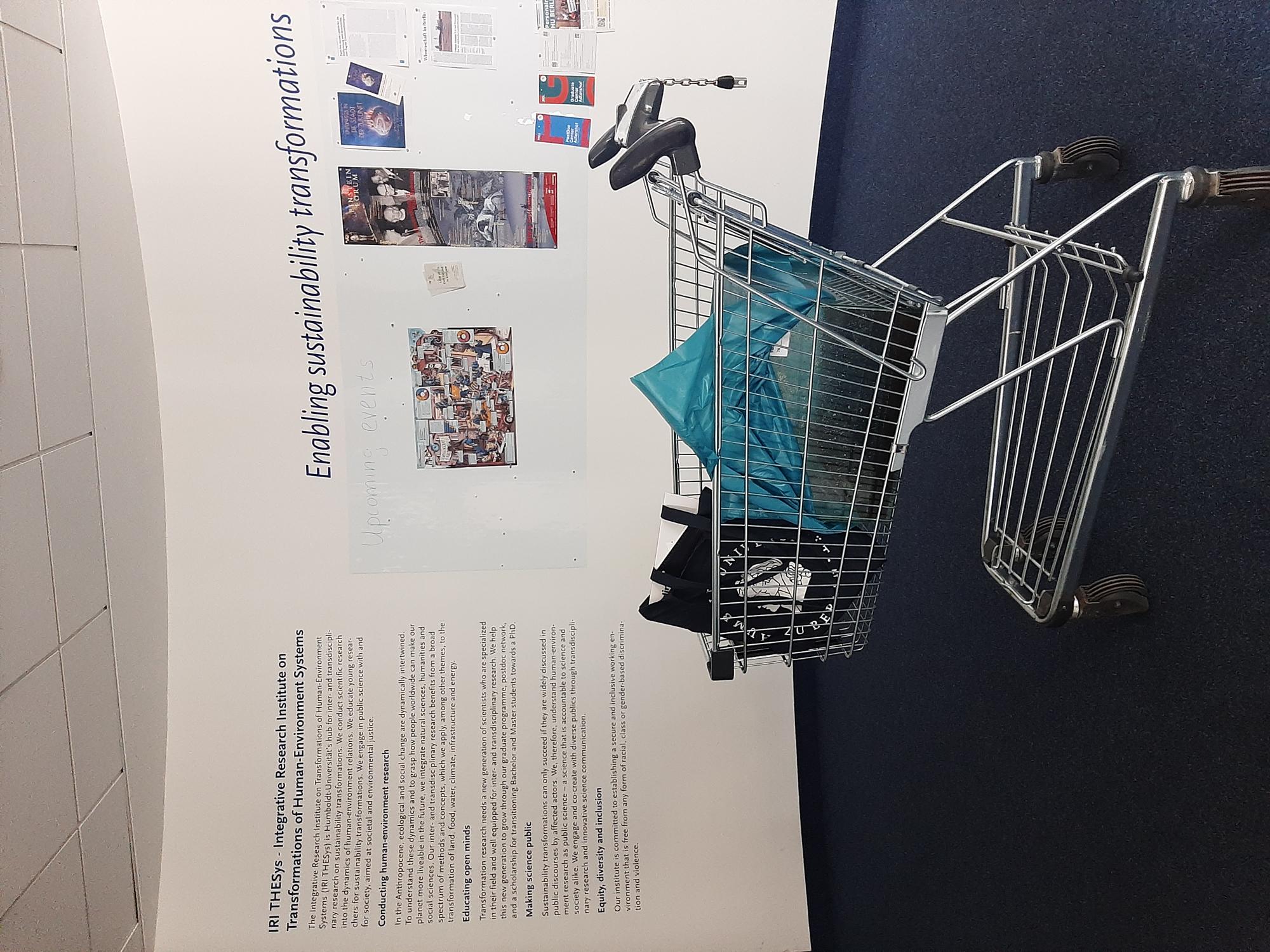
However, the aquarium remains in a precarious state, reflected in its various trips and transport across Berlin, being carried on foot, in public transit, and even in a shopping cart. While alternative funding streams are still being sought, the peculiar and disparate collection continues to persist, as an ever-transforming message, symbol, and fragment of a past waterscape.
Story by Pauline Münch.
Pauline is a science communicator who works with practice-based and transdisciplinary methods of knowledge exchange. Since 2020 she has been based at the Integrative Research Institute on Transformations of Human-Environment Systems (IRI THESys) at Humboldt-Universität zu Berlin, where she is involved in various projects, such as the experimental lab AnthropoScenes that connects art and science on the topic of water and climate in Berlin-Brandenburg, and the current project 'Past-proofing Infrastructure Futures' that co-creates methods and formats about the past, present and future of infrastructures.